
Liability Lifeguard:
Cut Costs, Prevent Vandalism, and Secure Your Pool with Remote Monitoring.
Swimming pools, particularly those managed by HOAs, municipalities, schools, or fitness centers, represent a unique and severe liability risk. They are sites of high public safety concern, requiring strict adherence to health codes and security rules to prevent injury, drowning, and unauthorized access. During off-hours, pools are highly susceptible to vandalism, unauthorized use (trespassing), and catastrophic equipment damage.
Traditional security—relying on signs, fences, and infrequent human patrols—is insufficient and costly. Hiring a specialized professional remote monitoring service, such as EndOfTheft, transforms pool security into an intelligent, proactive, and comprehensive liability management system that operates 24/7.
1. Extreme Liability Mitigation and Drowning Prevention
The most significant financial threat to any pool operator is the risk of a serious injury or drowning lawsuit, which can lead to multi-million dollar liabilities.
- Elopement and Off-Hours Intrusion Detection: Remote monitoring can establish virtual perimeters around the pool deck and fence lines. If a child, a vulnerable adult, or an unauthorized person attempts to access the pool area after hours, the system instantly flags the intrusion.
- Live Audio Talk-Downs for Intervention: When an unauthorized person is detected, the remote operator immediately issues a loud, personalized verbal warning (e.g., “Attention! This area is under surveillance. Leave the pool deck immediately, police have been notified.”). This is crucial for deterring off-hours swimming, when most severe accidents and liabilities occur.
- Incident Documentation: The service provides continuous, high-resolution, objective video evidence. This documentation is vital for defending against premises liability lawsuits, proving that warning signs were posted, or showing that unauthorized entry occurred despite security measures being in place.
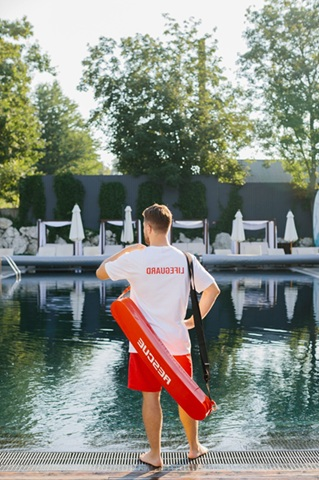
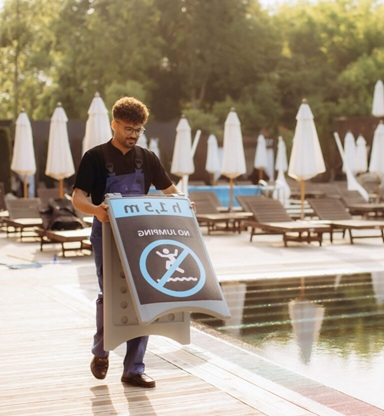
2. Prevention of Vandalism and Property Damage
Pool facilities contain valuable chemical controls and expensive pump and filtration systems, and often suffer from severe vandalism (graffiti, damaged equipment).
- Equipment Room Security: Remote monitoring focuses on vulnerable areas like chemical storage, pump rooms, and electrical panels. Proactive intervention stops vandals or thieves targeting copper wiring, filtration gear, or chemicals, which can cause both costly damage and dangerous environmental hazards.
- Stopping vandalism instantly: By deterring activity before damage occurs, the service prevents the high cost and disruption of cleaning up broken glass, graffiti, or damaged pool furniture.
3. Operational Compliance and Access Control
Pool operators are responsible for ensuring users comply with safety rules and that all health codes are met.
- After-Hours Access Control: The service ensures that only authorized cleaning or maintenance staff can access the facility after hours and verifies that all doors and gates are securely locked upon exit, a common failure point that can lead to unauthorized entry.
- Virtual Guard Rails (Supervision): During pool hours, the service can monitor the deck area and alert on-site staff (e.g., lifeguards or managers) to specific safety violations or situations that could lead to injury, augmenting human supervision.
- False Alarm Elimination: Remote human verification of perimeter alarms (often triggered by wind, animals, or falling debris) prevents unnecessary police dispatches and preserves a good relationship with local authorities.

The primary financial benefit is avoiding catastrophic liability and reducing recurring repair costs from vandalism and equipment damage.
Cost Saving/Risk Area
Traditional Model (Intermittent Patrols/Basic Alarms)
Professional Remote Monitoring Service
Estimated Annual Cost Savings & ROI
Drowning/Injury Liability
Extreme; high-stakes lawsuits average $1M or more for serious incidents.
Lowered; proactive intervention stops off-hours swimming; irrefutable video defense.
Avoids single-incident liability costs that can reach hundreds of thousands of dollars in legal fees and settlements.
Vandalism/Repair Costs
High; discovered hours later, leading to maximum damage/clean-up expense.
Low; Live Talk-Down deters crime instantly. Vandalism repair costs reduced by 60% – 90%.
Avoids recurring repair bills that often range from $3,000 – $10,000 annually (e.g., fence, furniture, graffiti).
Security Labor Costs (Off-Hours)
≈ $15,000 – $40,000 per year (for a few hours of nightly human patrol)
≈ $5,000 – $15,000 per year (Annual monitoring fee for the pool deck)
50% to 80% reduction in labor dedicated to perimeter checks and overnight security.
Insurance Premiums
High due to inherent risk and lack of verifiable, continuous security.
Lowered; demonstrably proactive safety measures lead to lower liability insurance premiums.
Potential reduction of $2,000 – $8,000+ in annual premiums.
The crucial ROI is the catastrophe averted. Preventing just one unauthorized off-hours intrusion that could have led to a significant injury or drowning lawsuit is an investment that protects the financial integrity of the managing organization for years.
For swimming pool operators, professional remote monitoring is an essential investment in safety and liability control. It provides a level of proactive deterrence, 24/7 access control, and comprehensive legal documentation that simple fencing and manual patrols cannot match. By using live intervention to prevent catastrophic off-hours incidents and deter recurring vandalism, a service like EndOfTheft allows pool management to reduce liability exposure and property repair costs drastically, ensuring a safer environment for the community and protecting the organization’s financial health.