
Property Management Surveillance Monitoring: Future- Proofing Assets
Property management companies oversee diverse portfolios—from commercial offices and retail centers to sprawling multi-family residential complexes and vacant land. Their core challenge is balancing maximum asset value with minimized operational expense, all while managing severe and evolving liability risks.
Traditional security measures, such as hiring on-site guards or relying solely on passive CCTV, are expensive, inconsistent, and reactive. Hiring a professional remote monitoring service, such as EndOfTheft, provides a scalable, centralized, and highly proactive property management surveillance monitoring in Cambridge and across Massachusetts to protect residential and commercial spaces.
1. Massive Reduction in Property Security Monitoring Costs
The cost of maintaining 24/7 human security staff is the single largest line item in many property management security budgets. Remote monitoring replaces the need for costly, stationary guards.
- Labor Replacement: A single, centralized remote monitoring center can cover multiple properties simultaneously. This allows property managers to reduce the number of expensive, full-time guards needed for static posts and after-hours coverage.
- Force Multiplier: Where human guards are retained, the remote monitoring service acts as the “eyes in the sky,” directing the physical guard to the verified location of a threat. Guards shift from passive watchers to efficient responders, maximizing their time and utility.
- Scalability: When new properties are added to the portfolio, the increase in security costs is negligible—often just a few thousand dollars per year per location—compared to adding an entire new 24/7 guard team.
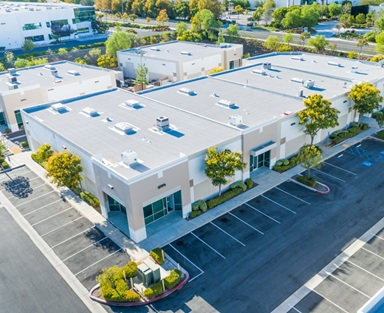

2. Proactive Crime Deterrence & Apartment Complex Surveillance
Passive CCTV only records a crime; remote monitoring actively prevents it from completion, which is vital for preventing property damage and tenant loss.
- Live Audio Talk-Downs: Remote operators use AI analytics to detect loitering, trespassing, or vandalism attempts in common areas, parking lots, storage facilities, and vacant units. They can instantly issue a loud, personalized verbal warning (e.g., “The police have been notified, leave the premises now!”). Studies show this proactive intervention can reduce completed crime by up to 90%.
- Protection of Vacant Properties: Vacant commercial spaces and construction sites are high-value targets for copper theft, equipment theft, and squatting. Remote monitoring provides continuous coverage at a fraction of the cost of physical security, preventing expensive remediation and delaying timelines.
- Verified Alarm Response: Remote human operators visually verify every alarm using video before contacting law enforcement. This ensures that police are dispatched only for a confirmed crime in progress, leading to faster police response times and reducing the risk of property damage.
3. Critical Liability Mitigation & Multifamily Monitoring Services
Property managers are liable for the safety of tenants, visitors, and vendors on their property. Remote monitoring significantly reduces this risk exposure.
- Irrefutable Documentation: High-resolution video footage provides complete, objective documentation of all incidents, including accidents, altercations, vandalism, and slip-and-falls. This documentation is invaluable for defending against premises liability lawsuits and insurance claims.
- Hazard Detection: Remote services can conduct virtual patrols to spot non-security liabilities, such as water leaks, pooling spills, or maintenance hazards (like damaged railings or poor lighting), alerting maintenance staff immediately before a tenant is injured.
- Reduced Insurance Premiums: Insurance carriers often offer lower premiums to properties that utilize proactive, verified monitoring, as the property’s risk profile (the likelihood of a successful claim) is demonstrably lower.

The financial argument for switching to remote monitoring is overwhelming, primarily because the cost difference compared to human guards is vast, and the economic return from preventing losses is substantial.
| Cost Saving/Risk Area | Traditional On-Site Guard (24/7 Coverage) | Professional Remote Monitoring Service | Estimated Annual Cost Savings |
|---|---|---|---|
| Security Labor Cost (Single Post) | ≈ $150,000 – $220,000 per year (wages, benefits, overhead) | ≈ $10,000 – $40,000 per year (Annual monitoring fee) | 60% to 90% reduction in fixed security labor cost. (Source data suggests savings can exceed $190,000 per post annually.) |
| Losses from Theft/Vandalism | Reactive; relies on guards spotting an issue; high after-hours vulnerability. | Proactive; live intervention deters crime before entry. Documented incident reduction of 40% to 90% reported. | Avoids single-incident costs that can exceed $10,000 – $50,000 in repairs and replacement. |
| Public Liability Lawsuits | High (basic systems/human errors trigger fines). | Lowered; irrefutable, objective video evidence for legal defense. | Prevents or defeats lawsuits that cost tens of thousands in legal fees and settlements. |
| Insurance Premium Reduction | Higher premiums due to higher liability exposure from human guards. | Lowered due to enhanced, verified security measures. | Potential reduction of $5,000 – $15,000+ in annual premiums. |
| False Alarm Fines | High; often triggered by faulty sensors or human error. | Near-zero; video verification eliminates unnecessary police dispatch and associated fines. | Eliminates recurring municipal fines that drain operational budgets. |
The return on investment (ROI) is rapid: most property managers recover the installation cost within 6 to 18 months through labor savings alone, making the subsequent years a period of pure, maximized security budget efficiency.
For modern property management firms, professional remote monitoring is the definitive solution to the complex challenge of efficiently securing assets. It provides a level of proactive deterrence, centralized control, and legal documentation that outdated, costly methods cannot offer. By achieving massive savings on fixed labor, actively preventing property damage, and minimizing crippling liability exposure, a service like EndOfTheft safeguards not only the physical assets but, more importantly, the property management firm’s reputation and profitability.