
How Remote Surveillance Helps Prevent Theft: A Smarter Security Strategy for Massachusetts Businesses
Every year, commercial properties across Massachusetts lose thousands of dollars to shoplifting, organized retail crime, internal shrinkage, and property vandalism. For decades, the standard response has been straightforward: hang security cameras on the walls, plug them into a recorder, and hope for the best.
But as business owners, warehouse managers, and property directors quickly learn, standard cameras do not actually stop criminals. A camera that simply records footage is fundamentally reactive. It watches a crime happen, logs the data, and leaves you to deal with the financial and operational aftermath the following morning.
To protect your bottom line, your security posture must shift from documenting losses to actively preventing them. This is where remote surveillance theft prevention strategies become essential. By transforming standard cameras into proactive defense assets, real-time tracking stops criminal activity before the damage occurs. This guide breaks down the mechanics of how remote monitoring works, why it outperforms traditional security models, and how it reduces risk for businesses across the state.
Why Traditional Security Often Fails to Prevent Theft
To understand how remote surveillance monitoring works, it helps to examine why standard security setups frequently fail to protect corporate assets.
- Cameras Only Record: Standard closed-circuit television (CCTV) setups act as passive digital witnesses. They compile video files on a local drive, but they cannot intervene. A thief scaling a fence or an employee pocketing inventory does not care about a camera that isn’t actively backed by live oversight.
- Incidents Are Discovered Too Late: Finding out about a break-in or inventory shrinkage eight to twelve hours after it occurred limits your options. By the time you review the footage, the stolen items are long gone, and your facility faces structural repair costs.
- Limited Supervision Over Operations: Security personnel assigned to night shifts face fatigue and restricted line-of-sight views. A single guard cannot check every corner, loading dock, and warehouse corridor simultaneously.
- Persistent Operational Blind Spots: Large commercial layouts naturally contain unmonitored zones or poorly lit areas, which become prime targets for both external intruders and internal inventory diversion.
Looking for a foundational breakdown? If you are new to this technology and want to understand the base architecture, read our comprehensive introductory guide: What Is Remote Video Monitoring?
How Remote Surveillance Prevents Theft Before It Happens
Proactive live video monitoring operates on a straightforward principle: intervene immediately to disrupt the criminal workflow. When you connect your infrastructure to an active commercial security monitoring center, the system stops crime through a structured, multi-step process.
Real-Time Monitoring
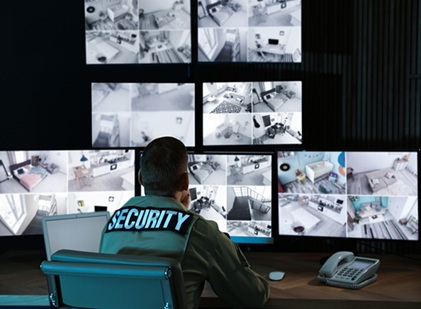
Instead of leaving your video feeds unviewed on a backroom monitor, your live streams are routed straight to a professional surveillance dashboard during high-risk windows. Security camera monitoring teams keep active watch over your perimeters, exit points, and high-value storage zones when your business is most vulnerable.
Early Detection of Suspicious Activity
Trained surveillance specialists do not wait for a window to break. They look for pre-incident indicators—such as a vehicle idling by a warehouse gate after hours, individuals loitering near a retail back entrance, or unauthorized personnel wandering near secure storage vaults.
Immediate Human Verification
Motion sensors and automated alerts can be easily tripped by passing traffic, weather changes, or stray animals. Remote monitoring introduces live human intelligence to filter out these false alarms instantly. When an unusual movement occurs, an operator immediately analyzes the situation to determine if it is a genuine security threat.
Rapid Response According to Your Monitoring Plan
The moment a real threat is verified, the monitoring specialist executes the exact response protocols you established in your site strategy. Depending on your business model, EndOfTheft can deploy on-site physical guards, activate local emergency channels, or initiate direct live intervention.
Visible Deterrence Through Live Monitoring
If your physical location features an integrated public address system, operators can issue direct, live verbal warnings to trespassers. Informing an intruder over a loudspeaker that they are under active human observation and that local law enforcement has been dispatched is highly effective—causing the majority of criminals to abandon the attempt immediately.
Types of Theft Remote Monitoring Can Help Reduce
A robust remote surveillance monitoring strategy addresses multiple vulnerabilities across criminal, operational, and internal threat layers:
- Shoplifting: Real-time scanning of retail floors helps pinpoint active concealment and alerts management before shoplifters cross the exit thresholds.
- Employee Theft: Consistent oversight of cash wraps, point-of-sale systems, and secure inventory rooms helps minimize internal loss and unauthorized register access.
- Inventory Shrinkage: Continuous verification of asset movement inside stockrooms ensures that discrepancies are logged and addressed immediately.
- Equipment Theft: Monitoring high-value industrial assets, vehicles, and specialized tools parked in open commercial yards overnight.
- Warehouse Theft: Keeping constant visual control over expansive logistics spaces to prevent organized inventory diversion.
- Loading Dock Theft: Verifying that cargo doors remain secure, tracking delivery vehicles, and ensuring items are not removed illicitly during late-night transfers.
- Unauthorized Access: Instantly spotting individuals who attempt to bypass security doors, scale perimeter fences, or slip into restricted employee zones.
- Vandalism: Stopping property defacement, fence cutting, and structural damage before it requires expensive corporate repair work.
- Trespassing: Detecting unauthorized individuals entering commercial zones, private construction spaces, or restricted property grounds after closing hours.
Industries That Benefit Most
Different commercial sectors face distinct security risks. Implementing targeted business security protocols allows you to adapt remote monitoring to the precise operational challenges of your industry.
Retail Stores
High customer traffic, complex layouts, and organized retail networks make retail spaces highly vulnerable. Live camera monitoring provides the continuous oversight needed to secure sales floors and loading bays, helping protect store profitability.
Learn more: Review our tailored Retail Stores Security Solutions.
Warehouses
Expansive distribution centers and unmonitored logistics yards often store millions of dollars in freight. Proactive surveillance helps secure perimeters, manage high-turnover loading docks, and prevent high-value cargo losses.
Learn more: Optimize your logistics facility with Warehouse Monitoring Services.
Property Management
Residential complexes, commercial buildings, and multi-family structures frequently experience property damage, unauthorized parking area access, and common room loitering. Live tracking secures perimeters and common spaces to support tenant peace of mind.
Learn more: Protect your real estate assets via Property Management Security.
Parking Lots
Isolated parking decks and dark open-air lots are common targets for vehicle break-ins and catalytic converter theft. Dedicated camera monitoring helps secure facility perimeters and documents lot activities in real time.
Hotels
Managing guest check-ins while securing remote hallways, storage rooms, and secondary entryways can stretch front desk teams thin. Remote monitoring acts as an extra set of eyes, providing continuous tracking of vulnerable resort and hospitality spaces.
Restaurants
High employee turnover, cash transactions, and late-night operational windows create vulnerabilities for restaurants. Professional monitoring tracks safety compliance, protects till areas, and reduces risks associated with after-hours operations.
Banks
Financial facilities require rigorous security parameters. Real-time video oversight keeps secure tabs on external ATM kiosks, drive-through lanes, and back-office spaces to manage complex institutional risks.
Cannabis Facilities
Strict state regulations demand comprehensive, multi-angle camera logging and continuous security tracking. Specialized remote monitoring helps satisfy local compliance mandates by actively securing cultivation zones, processing spaces, and retail vaults.
Why Human Monitoring Makes the Difference
While artificial intelligence and motion-detection algorithms are powerful additions to modern security systems, they cannot replace human judgment. Software can identify that a physical object is moving across a screen, but it cannot contextually analyze why that object is moving.
Tying live human monitoring into your system ensures that every automated alert is instantly evaluated by a professional specialist. A trained operator can easily distinguish between a standard delivery worker arriving early and a potential trespasser casing a loading bay. This practical human oversight eliminates the frustration of false alarms while ensuring that legitimate security incidents receive an immediate, appropriate response.
Can Remote Surveillance Reduce Business Losses?
While no security system can completely eliminate risk or guarantee a zero-incident environment, moving to a proactive monitoring model provides clear operational advantages that help control corporate losses:
- Fewer Active Incidents: Catching suspicious behavior early allows your security team to intervene before entry points are damaged or assets are removed from the site.
- Enhanced Operational Visibility: Beyond basic crime prevention, real-time monitoring gives management clear insights into shift workflows, safety protocol compliance, and daily logistical operations.
- Clear, Practical Documentation: If an incident does occur, you receive high-definition, time-stamped video logs that provide clear documentation for internal reviews, insurance claims, or legal assessments.
- Mitigation of Avoidable Losses: Actively managing risks like open loading dock doors, un-cleared waste hazards, or perimeter gate failures helps protect your facility from unnecessary liability claims.
Why Massachusetts Businesses Are Choosing Proactive Monitoring
From historic commercial centers to growing industrial hubs, Massachusetts operations require responsive security strategies that understand regional dynamics. EndOfTheft provides localized surveillance oversight designed to handle the fast-paced business environments across the Commonwealth.
Our remote teams actively support operations across key metropolitan centers:
- Deterring organized retail theft and managing high-density store footprints in Boston.
- Protecting large distribution hubs, logistics infrastructure, and expansive manufacturing plants in Worcester.
- Securing commercial buildings, multi-family properties, and shipping bays in Springfield.
- Providing secure oversight for corporate facilities, private laboratories, and tech spaces in Cambridge.
- Managing asset protection, lot safety, and perimeter security challenges in Lynn.
By combining local geographic awareness with advanced video streaming protocols, we deliver dependable asset protection that integrates smoothly with your daily business routines.
Frequently Asked Questions
1. Can remote surveillance stop an active theft in progress?
While remote surveillance cannot physically block an intruder, it is designed to disrupt their timeline. By detecting suspicious behavior early, delivering live audio warnings, and immediately notifying on-site guards or local authorities, the system creates a high-pressure environment that encourages most intruders to abandon the site before stealing assets
2. Is live remote monitoring better than standard recording?
Yes. Standard recording setups are entirely reactive—they only document a crime, meaning you discover the financial loss after it has already occurred. Live monitoring introduces human intelligence to analyze video feeds in real time, allowing you to intercept threats and prevent losses before they disrupt your business.
We deploy robust fallback systems. Many corporate setups utilize dual-internet lines or cellular backup routers. If a primary internet connection drops, the backup line immediately kicks in, keeping your live video feed connected to our center without security gaps.
3. Does remote monitoring work after standard business hours?
Yes. You can fully customize your monitoring schedule based on your operations. While some businesses choose continuous 24/7 oversight, many choose to activate the monitoring service the moment their facility closes for the evening, as well as throughout weekends and holiday closures.
4. Can I connect my existing commercial cameras to this service?
Yes. One of the main advantages of working with EndOfTheft is that you generally do not need to buy an entirely new suite of proprietary hardware. Using secure bridging software, we can link your existing IP, CCTV, or analog camera systems straight to our professional monitoring dashboard.
5. Is remote surveillance practical for smaller business setups?
Absolutely. Small businesses often face tighter operating margins and cannot afford the high overhead costs of hiring full-time, physical on-site security guards. Remote monitoring provides extensive, high-tier asset protection at a fraction of the cost of traditional security personnel payroll.
Final Thoughts
Relying on security cameras to simply record a loss after it happens leaves your business vulnerable to ongoing financial and operational disruptions. Upgrading to a proactive remote surveillance strategy allows you to turn your existing hardware into an active shield that protects your property, inventory, and staff around the clock.
Talk to Our Monitoring Specialists
Ready to turn your passive camera system into an active defense network? Contact our technical team today to discuss your site layout, analyze your current vulnerabilities, and discover how a customized monitoring strategy can help secure your Massachusetts business.